

“Political environments, whether within government institutions, corporate boardrooms, non-profit organizations, or international arenas, are rarely straightforward. Navigating complex political environments requires more than good intentions — it demands deliberate, well-informed strategy.”
Political environments, whether within government institutions, corporate boardrooms, non-profit organizations, or international arenas, are rarely straightforward. They are shaped by competing interests, shifting alliances, unequal power dynamics, and decisions that are often influenced as much by relationships and perception as by facts and merit. For leaders, managers, and professionals operating within these spaces, success depends not only on competence and good intentions but on the ability to navigate complexity with deliberate, well-informed strategy.
This article explores what it means to operate strategically within complex political environments. It examines why traditional, purely technical approaches often fall short in politically charged settings, and it outlines practical strategies, including stakeholder analysis, coalition building, scenario planning, and adaptive communication, that individuals and organizations can use to navigate these environments effectively while maintaining integrity and achieving meaningful outcomes.
Understanding Complex Political Environments

Complex political environments are characterized by multiple, often competing centers of power. Unlike simple hierarchical structures where authority flows predictably from the top down, political environments involve formal and informal power, where influence can come from titles, but also from relationships, information access, reputation, and the ability to build coalitions. Decisions in these environments are rarely made in isolation; they are shaped by negotiation, compromise, and the interests of multiple stakeholders who may have different, and sometimes conflicting, priorities.
This complexity is compounded when environments involve high stakes, scarce resources, or significant public visibility, conditions common in government agencies, large corporations, coalitions, and multilateral organizations. In such settings, even technically sound proposals can fail if they do not account for the political realities surrounding them, including who supports the idea, who might feel threatened by it, and how it aligns with broader institutional or personal interests.
Why Strategy Matters When Navigating Political Complexity

Many capable professionals underestimate the role that strategy plays in politically complex environments, assuming that strong ideas, hard work, or good intentions will naturally win support. In practice, ideas rarely succeed purely on merit within complex systems. Without a deliberate strategy for understanding the environment and engaging its key actors, even well-designed initiatives can stall, face unexpected resistance, or be quietly undermined.
Strategic navigation does not mean manipulation or dishonesty. Rather, it means approaching political environments with the same rigor and preparation that would be applied to any other complex problem: gathering information, understanding the interests and motivations of relevant actors, anticipating obstacles, and sequencing actions in ways that build support rather than trigger unnecessary resistance.
Stakeholder Analysis for Navigating Political Environments

A foundational step in navigating any complex political environment is understanding who the relevant stakeholders are and what they care about. Stakeholder analysis involves identifying individuals or groups who have influence over, or are affected by, a given decision or initiative, and assessing their level of interest, power, and likely position, whether supportive, neutral, or opposed.
- Identify formal decision-makers as well as informal influencers whose opinions carry weight.
- Assess each stakeholder’s underlying interests, not just their stated positions.
- Map relationships and alliances between stakeholders to anticipate how support or opposition might cluster.
- Prioritize engagement with stakeholders who hold the greatest combination of influence and interest.
This mapping process allows leaders to tailor their engagement strategy, focusing energy where it will have the greatest impact, while also identifying potential sources of resistance early enough to address them proactively rather than reactively.
Coalition Building in Complex Political Environments

In most political environments, no single individual, regardless of position, has the power to unilaterally drive significant change. Building coalitions, groups of stakeholders who share enough common interest to support a particular initiative, is often essential to achieving meaningful outcomes. Effective coalition building requires identifying shared interests, even among stakeholders who may not otherwise agree on everything, and framing initiatives in ways that speak to those shared interests.
Strong coalitions are built gradually, often through informal conversations and relationship-building that occur well before formal proposals are presented. Leaders who invest time in understanding colleagues’ priorities and building trust are better positioned to secure support when it matters most. Coalitions also provide a buffer against opposition, since proposals backed by a visible, diverse group of supporters are generally more resilient to challenge than those championed by a single individual.
Scenario Planning for Complex Political Environments

Complex political environments are rarely static, and initiatives that seem straightforward can encounter unexpected obstacles as circumstances shift. Scenario planning, the practice of anticipating multiple possible futures and preparing responses for each, helps leaders remain agile rather than reactive when conditions change.
Effective scenario planning in political contexts involves asking a series of deliberate questions: What are the most likely sources of resistance to this initiative, and why? What external events, such as leadership changes, budget cycles, or shifting public attention, could alter the political landscape? What is the minimum viable version of this initiative that could still succeed if support weakens? By preparing for multiple scenarios in advance, leaders can respond to setbacks with composure and adjust their approach without losing momentum entirely.
Communication as a Strategic Tool

How an initiative is communicated often matters as much as its substance. In politically complex environments, framing, the way an idea is presented, and to whom, can significantly influence how it is received. Effective political communication involves tailoring messages to the specific concerns and priorities of different audiences, rather than relying on a single, one-size-fits-all pitch.
- Lead with the concerns most relevant to each specific audience, rather than a generic overview.
- Use data and evidence to support claims, but pair it with narrative framing that connects to stakeholders’ values and interests.
- Communicate early and informally with key stakeholders before formal proposals, to reduce surprises and gather early feedback.
- Remain consistent in messaging across different audiences to avoid appearing to say different things to different groups.
Transparency and consistency are particularly important in political environments, where perceived inconsistency or hidden agendas can quickly erode trust and credibility, even if unintentional.
Balancing Assertiveness With Diplomacy
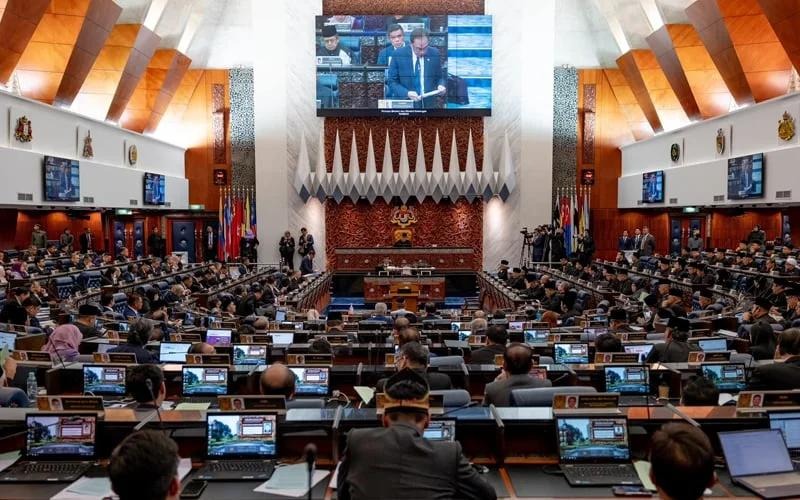
Navigating political complexity requires a careful balance between assertiveness and diplomacy. Leaders who are overly passive risk having their ideas sidelined or co-opted by more assertive actors, while those who are overly aggressive risk alienating potential allies and triggering unnecessary resistance. Successful navigation typically involves advocating clearly and confidently for one’s position while remaining genuinely open to feedback, willing to compromise on non-essential details, and respectful of differing viewpoints.
This balance is particularly important when initiatives touch on sensitive or contested issues, where stakeholders may have deeply held convictions. Leaders who can acknowledge the legitimacy of opposing viewpoints, even while advocating for their own position, are generally more successful at building the kind of trust needed for long-term influence.
Managing Risk When Navigating Political Environments
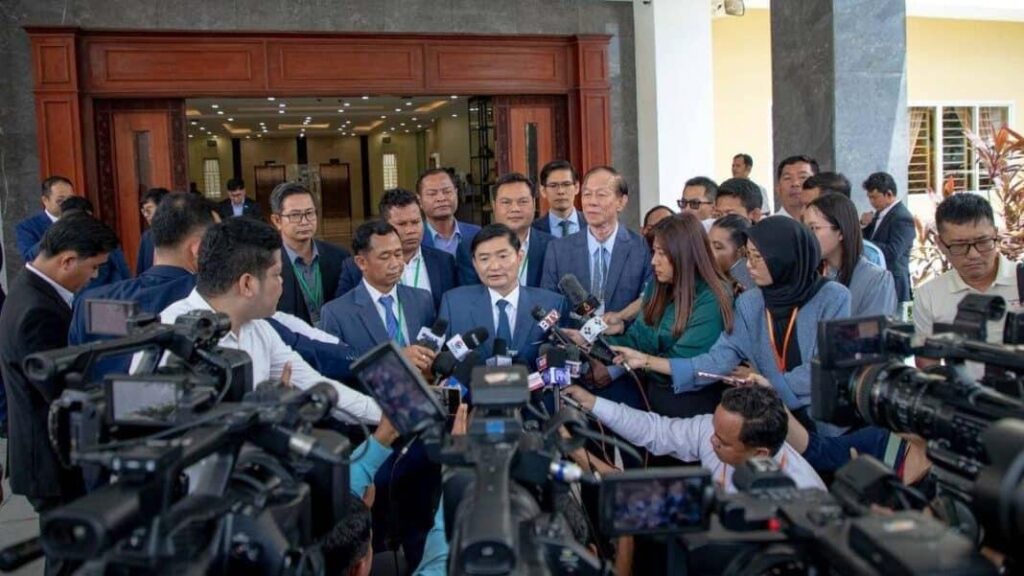
Strategic navigation of political environments inevitably involves an element of risk, whether reputational, professional, or organizational. Leaders must weigh the potential benefits of pursuing a particular initiative against the risks of opposition, failure, or unintended consequences. This requires honest self-assessment about how much political capital, the accumulated trust and goodwill a person has built within an organization, they are willing to spend on a given initiative, and whether the potential outcome justifies that expenditure.
At the same time, navigating political complexity strategically does not require compromising one’s integrity. The most sustainable political strategies are those built on genuine relationships, transparent communication, and a track record of following through on commitments. Leaders who rely on manipulation or deception may achieve short-term wins, but they typically erode the trust required for long-term influence, making future initiatives progressively harder to advance.
Adapting Your Strategy Across Complex Political Environments

Not all political environments operate the same way, and effective navigation requires adapting one’s approach to the specific context. Highly bureaucratic environments, such as many government institutions, often require patience, careful attention to formal processes, and extensive documentation to build support. Fast-moving corporate environments may reward quicker, more informal coalition building and a greater tolerance for calculated risk. International and multilateral settings often require heightened cultural sensitivity and an understanding of how national or organizational interests intersect with personal and institutional incentives.
Leaders who move between different types of political environments, for example, transitioning from the private sector into government, or from domestic to international roles, must be particularly attentive to these differences, recognizing that strategies that worked well in one context may need significant adjustment in another.
Common Pitfalls to Avoid

Even experienced professionals can stumble when navigating complex political environments. Some of the most common pitfalls include underestimating the importance of informal relationships, focusing exclusively on the technical merits of an idea while ignoring how it will be perceived politically, moving too quickly without adequately consulting key stakeholders, and failing to anticipate how an initiative might be perceived by groups outside the immediate circle of collaborators.
Another common mistake is treating political navigation as a one-time effort rather than an ongoing practice. Political environments evolve continuously as personnel change, priorities shift, and external circumstances develop. Leaders who treat stakeholder engagement and coalition building as continuous, rather than something done only when a specific initiative requires it, tend to be far better positioned when new challenges or opportunities arise.
Conclusion

Navigating complex political environments successfully requires far more than good ideas or technical expertise; it requires a deliberate strategic approach grounded in an understanding of stakeholders, relationships, and the underlying dynamics that shape decision-making. By conducting thoughtful stakeholder analysis, building genuine coalitions, planning for multiple scenarios, communicating with intention, and balancing assertiveness with diplomacy, leaders can advance meaningful initiatives even within challenging and contested environments.
Ultimately, the most effective political strategists are those who combine sharp situational awareness with unwavering integrity, recognizing that sustainable influence is built not through manipulation, but through trust, consistency, and a genuine commitment to understanding the perspectives of others. In a world where political complexity shows no sign of diminishing, whether within organizations, governments, or international institutions, the ability to navigate these environments strategically will remain one of the most valuable and enduring leadership skills. “Have questions or want to connect? Get in touch.”