

Introduction
On inauguration day, the atmosphere was electric. Citizens celebrated, supporters cheered, and expectations were high. The new administration promised economic reforms, improved public services, and a renewed commitment to accountability. For a while, progress seemed inevitable. Yet within a few years, many of the flagship initiatives had stalled. Key personnel had changed, institutional knowledge had disappeared, priorities shifted, and programmes that once inspired hope struggled to survive. The problem was not a lack of ambition or good intentions—it was the absence of systems capable of sustaining progress beyond individuals. This story is not unique. Across governments, political parties, nonprofits, and even private enterprises, organizations often achieve short-term success but fail to build the institutional resilience needed for long-term impact. Sustainable organizations are not built on personalities; they are built on structures, leadership, and systems that continue to deliver value regardless of who occupies the top office.
What Does It Mean to Build a Sustainable Organization?
Building sustainable organizations goes beyond financial sustainability or environmental responsibility. It is the deliberate process of creating institutions that can consistently achieve their mission, adapt to changing circumstances, and maintain effectiveness over time.
A sustainable organization has clear governance structures, strong leadership pipelines, transparent decision-making, effective performance management, and the ability to preserve institutional knowledge. It is resilient enough to withstand leadership transitions, economic uncertainty, policy changes, and external shocks without losing direction.
For political leaders and governments, sustainability means ensuring that reforms, policies, and public services continue to deliver results long after electoral cycles have ended. For democratic institutions, it means strengthening governance systems that inspire public trust and accountability.
Why Organizational Sustainability Matters More Than Ever
Today’s organizations operate in an increasingly unpredictable environment. Economic volatility, technological disruption, changing citizen expectations, cybersecurity threats, and geopolitical uncertainty demand institutions that are both agile and resilient.
The importance of sustainability is reflected in global research:
- According to the World Bank, institutions with stronger governance frameworks are more likely to deliver consistent public services and achieve long-term development outcomes.
- The Organisation for Economic Co-operation and Development (OECD) notes that effective public governance strengthens trust, improves policy implementation, and enhances institutional resilience.
- Research from the World Economic Forum consistently highlights institutional resilience and adaptive leadership as essential capabilities for navigating modern global risks.
These findings reinforce a simple truth: sustainable organizations are better equipped to respond to crises, deliver consistent performance, and maintain stakeholder confidence.
The Pillars of Sustainable Organizations

1. Purpose Beyond Leadership
Organizations with a clearly defined mission are less dependent on individual personalities. Their decisions are guided by shared objectives rather than changing leadership preferences.
For governments, this means aligning policies with long-term national development goals instead of short-term political gains. For political parties, it means building enduring institutions rather than campaign vehicles that disappear after elections.
2. Strong Governance Systems
Governance provides the framework through which organizations make decisions, allocate resources, and remain accountable.
Strong governance includes:
- Clearly defined roles and responsibilities.
- Transparent decision-making processes.
- Effective oversight mechanisms.
- Ethical leadership standards.
- Risk management frameworks.
Without governance, even well-funded organizations can become inefficient and vulnerable to failure.
3. Institutional Knowledge Management
One of the greatest threats to sustainability is the loss of institutional memory.
When experienced leaders leave without documented processes, valuable knowledge often disappears with them. Sustainable organizations invest in documentation, standard operating procedures, digital knowledge repositories, and leadership succession planning to ensure continuity.
4. Leadership Development
Organizations that depend entirely on one charismatic leader face significant risks.
Building sustainable organizations requires identifying, mentoring, and developing future leaders who understand the organization’s mission, values, and operating systems.
Leadership succession should be viewed as an ongoing strategic priority rather than a last-minute exercise.
5. Data-Driven Decision-Making
Modern organizations generate vast amounts of information, but sustainable institutions know how to convert data into strategic insights.
Performance indicators, stakeholder feedback, financial reporting, operational dashboards, and predictive analytics enable leaders to make informed decisions based on evidence rather than assumptions.
This strengthens accountability and improves long-term performance.
The Role of Stakeholders in Organizational Sustainability
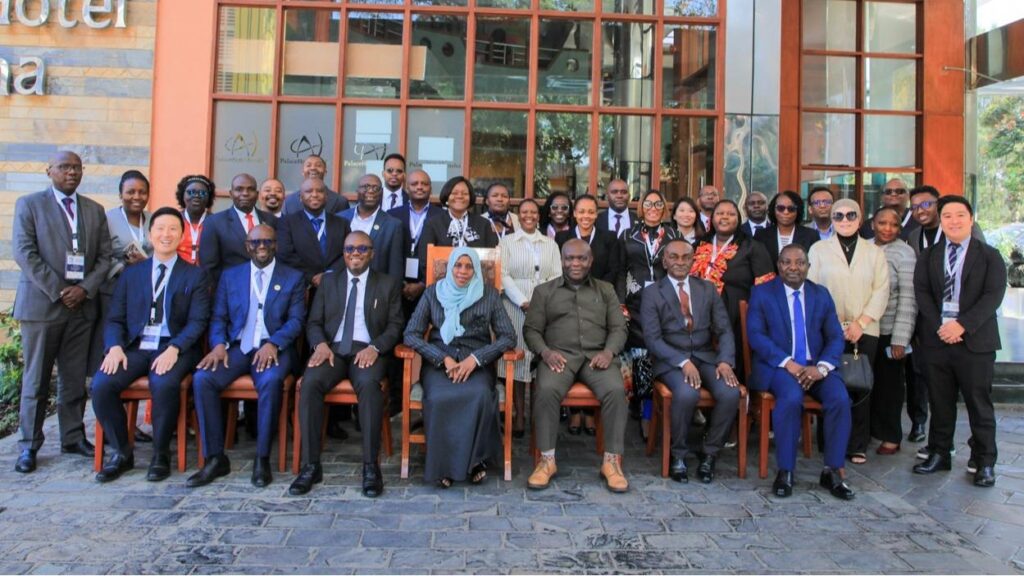
No organization operates in isolation.
Employees, citizens, investors, development partners, regulators, community leaders, civil society organizations, and the media all influence organizational success.
Organizations that actively engage stakeholders are better positioned to:
- Build public trust.
- Anticipate emerging risks.
- Improve policy implementation.
- Strengthen collaboration.
- Increase organizational legitimacy.
Stakeholder engagement should therefore be viewed as an ongoing governance function rather than an occasional communication exercise.
Managing Risk to Protect Long-Term Success
Every organization faces uncertainty.
Political transitions, economic downturns, technological disruption, regulatory changes, and public crises can all threaten institutional performance.
Sustainable organizations prepare for these challenges by embedding risk management into strategic planning.
This includes:
- Regular risk assessments.
- Scenario planning.
- Business continuity planning.
- Crisis communication strategies.
- Continuous monitoring of internal and external risks.
Organizations that anticipate risks are more likely to remain effective during periods of disruption.
Building a Culture of Accountability
Culture is often described as “how things are done around here.”
A sustainable organization fosters a culture where integrity, transparency, collaboration, and continuous improvement become everyday practices.
Leaders play a crucial role in shaping this culture by:
- Setting clear expectations.
- Measuring performance objectively.
- Rewarding ethical behaviour.
- Encouraging innovation.
- Promoting learning from successes and failures.
When accountability becomes part of organizational culture, performance improves naturally.
Digital transformation has fundamentally changed how organizations operate.
Technology as an Enabler of Sustainability

Technology enables institutions to improve efficiency, enhance collaboration, strengthen transparency, and preserve institutional knowledge.
Examples include:
- Digital document management systems.
- Performance management dashboards.
- Workflow automation.
- Data analytics platforms.
- Stakeholder engagement tools.
- Artificial intelligence for strategic planning.
Technology alone does not create sustainable organizations, but when combined with effective leadership and governance systems, it becomes a powerful enabler of long-term success.
From Campaign Success to Institutional Success
For political leaders, one of the greatest leadership challenges is translating electoral success into sustainable governance.
Winning an election provides a mandate, but lasting impact depends on the systems established after victory.
This requires careful planning across governance transition, stakeholder engagement, institutional coordination, performance management, and policy execution.
Organizations that prioritize these capabilities are better positioned to deliver measurable public value and strengthen democratic institutions.
How LEADGovtOS Supports Sustainable Leadership

Building sustainable organizations requires more than vision—it requires integrated systems that support leadership throughout the entire governance journey.
As Africa’s Campaign-to-Government Operating System™, LEADGovtOS works with political leaders, governments, political parties, and democratic institutions to strengthen political intelligence, governance transition, performance management, stakeholder engagement, institutional coordination, and leadership systems that help transform electoral mandates into measurable governance outcomes.
Rather than focusing solely on election victory, the emphasis is on building organizations and institutions capable of delivering lasting public impact through disciplined execution, accountability, and continuous improvement.
Conclusion
Building sustainable organizations is not a one-time initiative but a long-term commitment to strengthening leadership, governance, people, processes, and institutional resilience. Organizations that invest in robust systems, develop future leaders, engage stakeholders, embrace data-driven decision-making, and prepare for uncertainty are better equipped to create lasting value regardless of changing circumstances.
Whether in government, democratic institutions, political parties, or mission-driven organizations, sustainable success depends on building institutions that endure beyond individual leaders and continue delivering measurable results for the people they serve. As expectations for accountability, transparency, and performance continue to grow, the organizations that thrive will be those that prioritize systems over personalities and legacy over short-term achievements. Is your organization building systems that will continue creating impact long after today’s leaders have moved on?
Build Sustainable Institutions with LEADGovtOS™
Sustainable organizations are not built by chance—they are built through intentional leadership, robust systems, and disciplined execution. Whether you’re preparing for an election, strengthening a political party, managing a governance transition, or improving institutional performance, LEADGovtOS™ provides the strategic intelligence, governance frameworks, and operating systems needed to achieve lasting impact.
Book a Strategic Discovery Session today and discover how LEADGovtOS™ can help you build systems that win, govern effectively, and create an enduring legacy.