
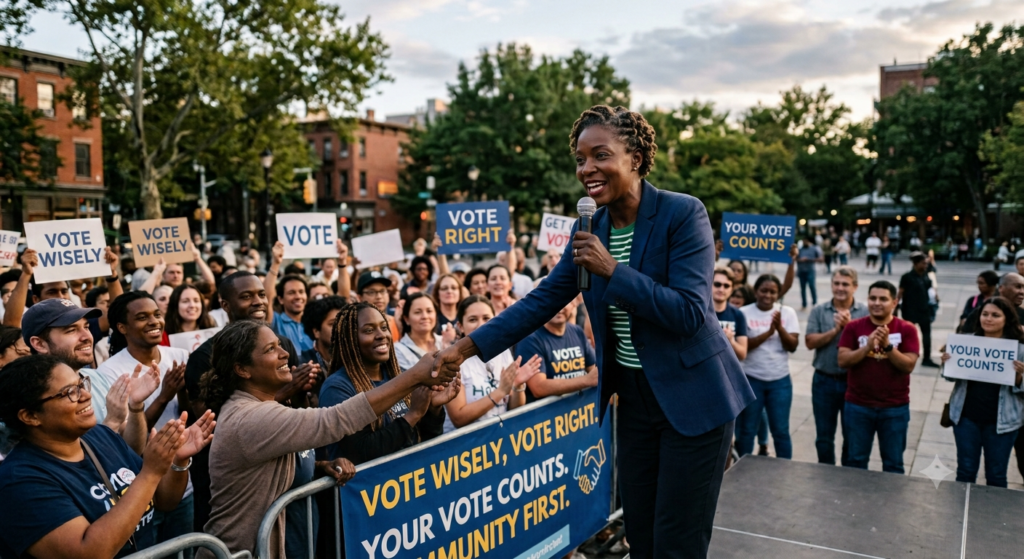
Every election season, the airwaves fill with promises. Candidates crisscross communities, shake hands, deliver rousing speeches, and pledge to transform roads, schools, hospitals, and economies overnight. Crowds cheer. Placards wave. Excitement spreads. But once the euphoria settles and voters cast their ballots, a familiar and troubling pattern emerges: many voters realize, too late, that they never actually knew what they voted for.
This is the quiet crisis at the heart of modern electoral politics — voters rarely demand a candidate’s blueprint and manifesto before they vote. A blueprint spells out the practical, step-by-step plan a candidate will follow if elected. A manifesto states the candidate’s values, vision, and policy direction. Together, they form the closest thing to a contract between a candidate and the electorate. Yet in campaign after campaign, candidates keep these documents vague, withhold them entirely, or never publish them at all — and voters rarely push back.
The Problem With Promises Alone
Charisma wins applause, but it doesn’t build roads, staff hospitals, or create jobs. Voters too often decide elections based on emotion, popularity, ethnic or regional loyalty, or sheer name recognition rather than a rigorous look at what a candidate actually plans to do in office. Without a documented blueprint, voters lose their benchmark. They can’t measure a candidate’s performance once elected, and they lose their standing to ask the one question that matters most: “You said you would do this — what happened?”
This is exactly why prospective voters must make a habit of requesting, reading, and interrogating every candidate’s blueprint and manifesto before an election, not after.
Why Voters Must Demand These Documents
1. It Turns Voting Into an Informed Decision, Not an Emotional Reflex
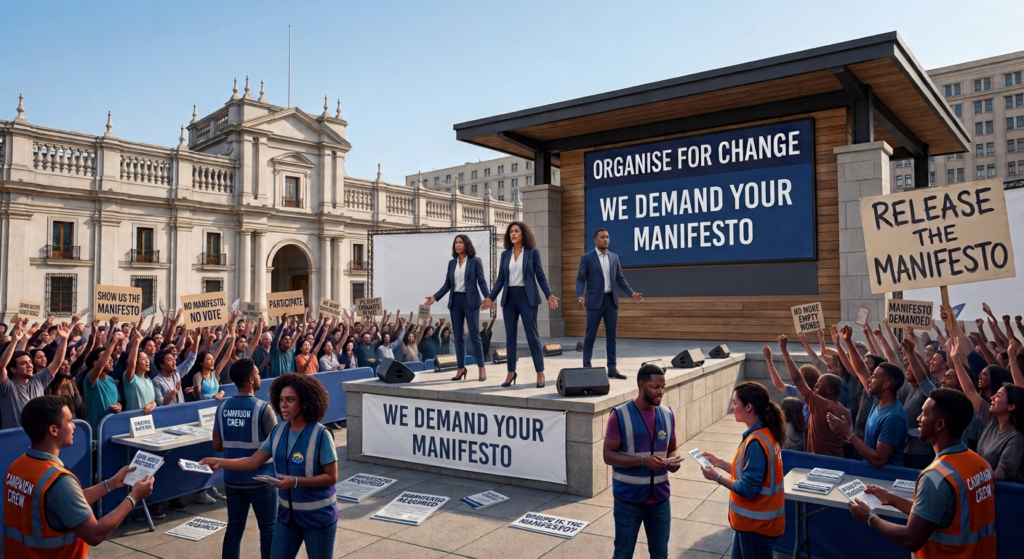
Elections often turn on sentiment — a good speech, a viral video, a charismatic personality. These things matter for communication, but they should never decide who leads. A manifesto forces a candidate to move from rhetoric to specifics: What’s your position on unemployment? How will you fund infrastructure? What’s your five-year economic plan? When voters demand these details, they shift the conversation from a popularity contest to a policy contest.
2. It Gives Voters a Standard to Hold Leaders Accountable
Governance struggles most when accountability disappears once a candidate takes office. Without a documented blueprint agreed on before the election, citizens have nothing concrete to point to when they demand explanations for broken promises. A published manifesto becomes a public record. Civil society organizations, journalists, and everyday citizens can use it to track performance, ask hard questions, and demand answers. It becomes the electorate’s tool for post-election oversight.
3. It Exposes Candidates Who Haven’t Done the Work
Any candidate serious about leadership can write down a clear vision and a workable plan for the office they seek. When a candidate dodges questions about their blueprint or offers only vague lines like “I will develop this state” without specifics, that dodge tells voters something important. It reveals either a lack of preparation or a lack of sincerity — and voters deserve to see both before the election, not after.
4. It Pulls Campaigns Toward Issues and Away From Identity Politics
Too many elections turn on tribe, religion, region, or personality instead of substance. When voters insist on blueprints and manifestos as a condition for their support, they force candidates to compete on ideas and solutions instead. This pressure gradually shifts the political culture toward issue-based campaigning, where the strength of a candidate’s plan for education, healthcare, security, or the economy becomes the true measure of electoral success.
5. It Lets Voters Compare Candidates on Equal Footing
When several candidates contest the same office, an average voter can struggle to tell them apart beyond party affiliation or personal charm. A manifesto gives voters a structured basis for comparison. They can place documents side by side and ask: Whose economic plan is more realistic? Whose healthcare policy actually addresses our community’s needs? This comparison sharpens the electorate and replaces guesswork with evidence.
6. It Protects Voters From Post-Election Disillusionment
Nothing damages trust in democracy faster than the feeling of being deceived. When citizens vote on vague promises and later discover their elected official never had a coherent plan, disillusionment sets in — and it often shows up as voter apathy in the next election. When voters insist on detailed blueprints upfront, they set realistic expectations from day one and protect themselves from that letdown.
What a Credible Blueprint and Manifesto Must Contain
Voters need to know what to look for. Demand that every candidate’s blueprint and manifesto include:
- A clear vision statement — the overarching goal or philosophy driving the candidacy.
- Sector-specific policies — detailed plans for education, healthcare, security, infrastructure, agriculture, employment, and the economy.
- Timelines and milestones — specific, time-bound targets, not open-ended aspirations.
- A funding and implementation strategy — a realistic explanation of how the candidate will finance and execute proposed projects.
- Metrics for success — measurable indicators citizens can use to track progress after the candidate takes office.
Treat any document that skips these elements with healthy skepticism, no matter how polished the surrounding campaign looks.
Campaign Organizations Must Lead This Push
Organizations that run electoral campaigns carry real responsibility here. They shouldn’t just help candidates package their messaging — they should actively push candidates to produce comprehensive, realistic, and publicly accessible blueprints and manifestos. This doesn’t only serve the electorate; it protects the candidates too, by showing seriousness, preparation, and respect for the process.
Campaign organizations and civic groups can go further: host public forums, organize debates, and run town halls where candidates present these documents and face direct questions. This builds a culture where transparency becomes the expectation, not the exception.
A Call to Action for Voters
As campaign season unfolds and candidates court your vote, resist the pull of charisma alone. Ask every candidate:
- May I see your blueprint for this office?
- What specific plans do you have for the next four years?
- How will you measure your own success if elected?
Don’t treat these questions as hostile. Ask them anyway. They mark a mature, engaged democracy. A candidate who welcomes this scrutiny shows confidence and preparation. A candidate who avoids it hands you the answer you need — before you vote, not after.
Conclusion
Democracy runs on more than the right to vote — it runs on the quality of information voters have when they use that right. Blueprints and manifestos aren’t bureaucratic paperwork; they’re the tools that turn campaign promises into measurable commitments. As an organization committed to strengthening the electoral campaign process, we urge every voter to demand these documents and use them. Doing so builds a more accountable, transparent, and issue-driven political culture.
The next time a candidate approaches you for your vote, don’t just listen to the speech — ask for the blueprint. Don’t just admire the charisma — read the manifesto. Your vote is too valuable to give away on promises alone. Give it on the strength of a plan.
Ready to elevate your campaign? Partner with LEADGOVTOS for professional support in developing compelling candidate blueprints, impactful manifestos, and winning campaign strategies. Contact us today to learn how we can help you achieve electoral success.