

Nigeria’s development future depends not only on what happens at the federal level, but on how effectively states and local governments can mobilize resources, manage spending, and deliver public value. Subnational fiscal resilience is therefore not a technical finance issue alone; it is a governance issue, a development issue, and a leadership issue.
For LeadGovtOS, this topic matters because governance is strongest when institutions can perform consistently under pressure. If states are too dependent on volatile federal transfers, struggle with weak internal revenue systems, and carry rising debt burdens, then public service delivery becomes fragile. Building fiscal resilience at the subnational level is one of the clearest ways to improve long-term governance capacity and create durable development outcomes.
Why fiscal resilience matters
Fiscal resilience means a government can withstand shocks, adapt to changing economic conditions, and continue funding essential services without collapsing into crisis. For Nigerian states, this means having enough internal capacity to generate revenue, budget responsibly, prioritize capital spending, and manage debt prudently.
This matters because states are often the level of government closest to the people. They are responsible for key services such as primary healthcare, education support, roads, water systems, and local economic development. If state finances are weak, citizens feel the consequences immediately in poor infrastructure, delayed salaries, underfunded programs, and stalled reforms.
The fiscal challenge
A major challenge facing many states is heavy dependence on Federation Account Allocation Committee revenues. According to NESG, over 30 states still derive more than 70 percent of their revenues from FAAC, with only Lagos and Ogun showing substantial IGR capacity among the states highlighted. This means many states are exposed to national revenue volatility and do not have enough independent fiscal strength to plan confidently.
The problem is not just low revenue. It is also how revenue is managed. Low capital-to-recurrent expenditure ratios, weak public financial management, and rising public debt continue to constrain subnational fiscal capacity. When too much of the budget goes to salaries, overheads, and short-term consumption, little remains for the infrastructure and service investments that drive development.
The governance cost of weak finances
Weak fiscal systems create weak governance. When a state cannot generate reliable revenue or control its spending, leadership becomes trapped in short-term crisis management. Planning suffers. Strategic programs are postponed. Investors lose confidence. Public institutions become less effective.
This is why fiscal resilience is more than accounting discipline. It is about whether government can keep functioning with credibility. A state that cannot budget realistically or execute efficiently will struggle to deliver on campaign promises and development plans. In practical terms, fiscal weakness becomes governance weakness
Pathway one: strengthen internal revenue

The first pathway to fiscal resilience is to improve internally generated revenue. States need modern, transparent, and fair systems for collecting taxes, fees, and charges. That does not mean simply increasing pressure on citizens. It means widening the tax base, improving compliance, reducing leakages, and using data to make revenue administration more efficient.
States with stronger IGR capacity are better able to plan, borrow responsibly, and invest in priority sectors. They are also less exposed to shocks in federal revenue distribution. Building this capacity requires political will, administrative reform, and technology-enabled revenue systems. LeadGovtOS’s broader emphasis on systems thinking aligns well with this kind of reform because revenue resilience is ultimately a systems problem, not just a policy slogan.
Pathway two: improve spending discipline
Raising revenue alone is not enough. States must also spend better. One of the clearest signs of fiscal weakness is when recurrent expenditure crowds out capital investment. Salaries and overheads are necessary, but if they dominate the budget, development slows.
A fiscally resilient state uses its resources strategically. It protects capital spending, avoids waste, and links budgets to measurable priorities. It also reviews programs regularly to ensure money is going where it has the highest public value. This requires strong budgeting institutions, political discipline, and honest performance tracking.
For LeadGovtOS, this is important because governance effectiveness depends on execution. A government that budgets without discipline may win policy praise but fail in delivery. Strong systems help prevent that gap.
Pathway three: strengthen public financial management
Public financial management is one of the most important foundations of fiscal resilience. It includes budgeting, accounting, procurement, cash management, reporting, and audit processes. When these systems are weak, leakages grow and public trust declines.
The World Bank notes that transparency and accountability reforms across Nigerian states have been important to fiscal sustainability. That shows that reforms in financial management are not abstract. They can improve how states raise, allocate, and report public resources. Better financial management also makes it easier for citizens, legislators, and oversight bodies to see whether government is performing responsibly.
A resilient state needs clean systems, timely reporting, and credible controls. Without those, even high revenue can produce poor outcomes.
Pathway four: manage debt carefully
Debt can be useful when it finances productive investment. It becomes dangerous when it funds consumption, covers persistent deficits, or accumulates without a clear repayment strategy. Rising public debt is one of the warning signs of fiscal stress at the subnational level in Nigeria.
States need debt policies that are grounded in realism. Borrowing should support development that expands future capacity, not simply delay hard choices. That means assessing debt service burdens carefully, linking borrowing to projects with economic value, and maintaining transparency about obligations.
From a governance perspective, responsible debt management is part of trust. Citizens are more likely to support reform when they believe public borrowing is disciplined and purposeful. Poor debt management, by contrast, reduces flexibility and can trap future administrations in inherited liabilities.
Pathway five: use responsive budgeting
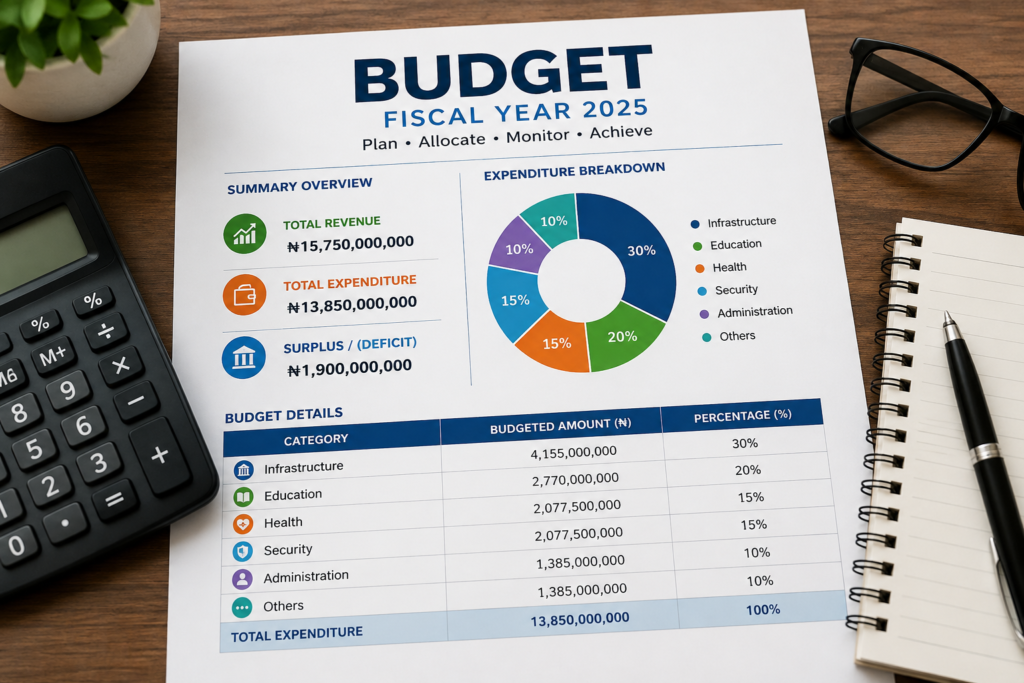
Nigeria’s economic environment can change quickly through inflation, exchange-rate pressure, revenue fluctuations, and policy shifts. States that budget rigidly are more vulnerable to these shocks. Responsive budgeting allows governments to adapt priorities without losing control.
This means using realistic revenue assumptions, building contingency plans, updating budgets when conditions shift, and protecting essential services during downturns. It also means tying spending to results rather than treating the budget as a once-a-year ritual.
Responsive budgeting is especially relevant for subnational governments because their fiscal space is often narrower than the federal government’s. A resilient state is not one that never faces stress. It is one that can adjust without breaking.
The role of leadership

No fiscal reform succeeds without leadership. Systems matter, but leaders must decide to build them. They must be willing to make difficult choices, confront inefficiency, and prioritize long-term stability over short-term popularity.
This is where LeadGovtOS’s approach becomes highly relevant. The organisation’s model emphasizes intelligence, accountability, discipline, and institutional thinking. Those are the same qualities required to build subnational fiscal resilience. A governor or public leader who understands systems can use them to protect the future of the state.
Leadership also matters because fiscal reform often faces resistance. Revenue reform can be unpopular. Spending discipline can disrupt entrenched interests. Procurement reform can challenge informal networks. But without leadership courage, the state remains exposed to preventable weakness.
Why this matters for development
Fiscal resilience and development are inseparable. States cannot build roads, expand healthcare access, improve schools, or attract investment if their finances are unstable. Development needs predictable institutions and credible budgets. When fiscal systems are weak, development becomes episodic. When fiscal systems are strong, development becomes sustainable.
This is why subnational fiscal reform should be viewed as a development strategy, not just a budget exercise. It improves the state’s ability to plan, execute, and measure results. It also strengthens the relationship between government and citizens by making public service more reliable.
A practical reform agenda
States seeking to build fiscal resilience can start with a focused agenda:
- Improve revenue data and compliance systems.
- Broaden the tax base fairly.
- Reduce recurrent spending pressure.
- Protect and increase capital investment.
- Strengthen budgeting, audit, and procurement systems.
- Adopt debt rules tied to productive outcomes.
- Publish clearer financial performance reports.
- Link budgets to measurable service delivery goals.
These reforms are not glamorous, but they are foundational. Over time, they create the fiscal room that governments need to perform.
Why LeadGovtOS should care
For LeadGovtOS, subnational fiscal resilience is part of the larger governance story. The organisation’s identity is built around helping leaders move from campaign success to effective government. But effective government depends on financial capacity. A government cannot perform well if it cannot fund its priorities, manage its systems, or sustain its reforms.
That is why fiscal resilience belongs in the conversation about strategy, governance transition, and institutional legacy. It is how states move from dependency to capability. It is how leaders convert political authority into public outcomes. And it is how governments create a foundation for sustainable development.
Conclusion
Building subnational fiscal resilience in Nigeria is not simply about increasing revenue or cutting costs. It is about building governments that can survive shocks, plan responsibly, spend wisely, and deliver consistently. It requires stronger institutions, disciplined leadership, and a long-term commitment to reform.
For LeadGovtOS, this is a natural extension of the organisation’s mission. Strong systems create strong campaigns, strong governments, and lasting impact. Fiscal resilience is one of the systems that matter most. When states get it right, governance becomes more sustainable and development becomes more achievable.
To learn more, contact us at leadgovtos.org or call 07076092561